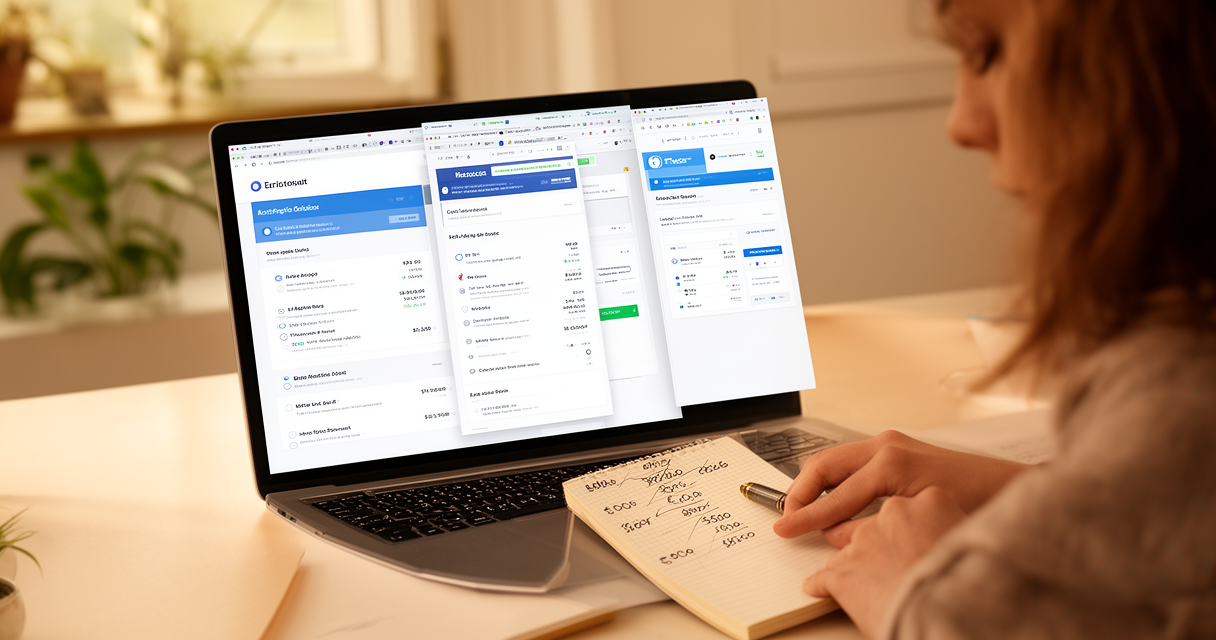
One seller on r/shopify put the subscription-app problem plainly: “Starting a Shopify store and realizing EVERYTHING is a subscription is actually insane.” The irony is thick — to sell subscriptions, Shopify stores pay subscriptions to apps. At least three of those apps are competing hard for small-store budgets: Recharge, Appstle, and Seal Subscriptions.
The comparison for Recharge vs Appstle vs Seal Subscriptions for small Shopify stores comes down to one number sellers don’t always check before installing: what the app costs at their actual order volume, not the marketing-page starting price. Recharge’s base plan runs around $99/month before a single subscription ships. Appstle and Seal both offer free tiers with 0% transaction fees.
For a store doing fewer than 300 subscription orders per month, the verdict is short: start on Seal or Appstle’s free plan to validate the channel, move to Appstle’s paid tiers ($10–$30/month) as volume grows, and evaluate Recharge only after crossing 500+ active subscribers. Recharge is the Klaviyo of subscription apps — built for scale, overkill on day one.
The full cost breakdown follows.
Quick-Verdict Comparison Table
Prices verified as of mid-2026 — subscription app pricing changes frequently. Confirm current figures on each app’s listing before committing.
| Recharge | Appstle | Seal Subscriptions | |
|---|---|---|---|
| Free plan | No | Yes (up to ~$500/mo sub revenue) | Yes (up to ~150 subs — verify on listing) |
| Transaction fee | ~1.49% + $0.19/order (verify current rate) | 0% on all plans | 0% on all plans |
| Entry paid price | ~$99/mo (Standard); Starter ~$25/mo for new merchants only — verify existence | ~$10/mo | ~$5.95/mo |
| True cost at 100 orders, $30 AOV | ~$163/mo (see example math below) | ~$10–$30/mo | ~$9.95/mo |
| Migration portability | Poor — card tokens held by Shopify Payments; documented as not transferable | Moderate | Poor — CSV import has documented duplicate-subscription bugs |
| Best for | 500+ active subscribers, enterprise features | 50–500 subs, feature depth | 0–150 subs, simplest possible launch |
Shopify native subscriptions (the free built-in option via Shopify’s own API) is worth naming as a $0 baseline — but it offers near-zero management UI, no customer self-service portal, and no dunning logic. For any store planning to actively manage subscriber churn, it falls short almost immediately.
Recharge: The Enterprise Standard With a Small-Store Trap
Recharge is the oldest and most widely adopted Shopify subscription platform — the default choice for high-volume DTC brands. That history is its main selling point and its main small-store problem.
The Standard plan runs approximately $99/month plus a transaction fee of approximately 1.49% + $0.19 per order (this was 1.25% historically — verify the current rate on Recharge’s pricing page before budgeting). The Plus tier runs approximately $499/month. A Starter plan at approximately $25/month has been offered to new merchants only, with an order cap — verify whether this tier still exists before relying on it.
The true-cost math at small volume is punishing. Using an example of 100 orders per month at $30 average order value: the transaction fees alone add approximately $64/month (100 × ($30 × 0.0149 + $0.19)), putting all-in cost at approximately $163/month. These are example figures using stated assumptions — actual cost depends on Recharge’s current fee and your own AOV. At 50 orders/month the fees are lower, but the $99 base plan doesn’t move.
The platform’s depth is real: build-a-box, prepaid subscriptions, tiered discounts, advanced dunning sequences, and deep analytics. Pairing it with a post-purchase upsell app to boost average order value makes more sense when the per-order fee is already baked into the math. At 500+ active subscribers, the feature investment pays off.
The lock-in problem is documented and worth understanding before signing. One seller in r/shopify was direct: “I personally feel like ReCharge is a scam… they now charge 99 as the base on top of what I get charged per customer… The only reason I haven’t changed yet is the hassle of moving all my existing clients off their system.” The hassle is structural. Card tokenization for Shopify Payments subscribers sits with Shopify, not Recharge — meaning migration of billing credentials is not straightforward. Another seller reported contacting both Recharge support and Shopify directly: “Recharge support… they can only export customer data, but no payment details/tokens… Shopify finally said ‘what you are requesting is not possible.’” That quote describes a real documented limitation, not an edge case.
Support response times on Standard plans have been widely reported as slow in the r/shopify community — enterprise-grade tooling with a support tier to match.
Appstle: Feature Depth at a Fraction of the Price
Appstle has over 40,000 Shopify merchants as of 2026, built on a pitch that’s hard to argue with: 0% transaction fees, a free tier up to approximately $500/month in subscription revenue, and a paid plan starting at approximately $10/month. Those figures should be verified on the current Shopify app listing, but the 0% fee structure across all tiers has been a consistent differentiator.
The feature set punches well above its price: build-a-box bundles, prepaid plans, subscription pauses, cancellation flows, and product-swap options are all present. For a store moving from 50 to 500 active subscribers, it covers most of what Recharge charges $99+/month to provide.
The downsides are well-documented. One seller in r/shopify: “Appstle is bloated with half-baked features and bad UX. The analytics are hard to find/understand.” The interface shows its ambition — it supports a wide range of subscription models, but navigating between them requires patience. Analytics dashboards exist but are not intuitive.
The hidden cost that few roundups flag: API and webhook access. One seller reported: “once I added API and webhooks on Appstle, my price jumped from $100/mo to $400/mo.” The jump from standard paid tiers to developer-grade API access represents a significant pricing cliff if a store plans to build any custom integration (verify current add-on pricing on the listing). For stores staying within Appstle’s native UI, this ceiling doesn’t apply — but it’s worth confirming what the next tier costs before building around the platform.
That said, support quality is consistently praised. Another seller: “I’d hesitate to dump Appstle. Their support is outstanding.” For a solo operator without a developer, responsive support is a real operational asset.
Seal Subscriptions: Simplest Launch, Best Customer Portal
Seal Subscriptions is the most underrated of the three for new stores. The free plan covers approximately 150 active subscriptions with 0% transaction fees — though there’s conflicting information in the community about whether the cap is 50 or 150, so verify the current free-tier limit on the app listing before planning around it. Paid tiers run approximately $5.95/month, $9.95/month, and $24.95/month (verify current pricing on the Shopify app listing).
The UI is the simplest of the three — installation to first subscription in under 30 minutes is realistic for a non-technical seller. For validating whether subscription revenue works for a product at all, that speed matters.
The standout feature at any price tier is the customer self-service portal. Subscribers can edit billing dates, swap products, pause, and update payment details — including entering a card directly in the portal even if their original purchase used Shop Pay. One seller in r/shopify noted this explicitly: “The actual reason I chose Seal is the customer portal experience. Even if they’re Shop Pay, they can still enter a card in the portal.” Subscriber self-service reduces support tickets and churn, which matters more than feature depth in the early months.
Pairing Seal with a solid review app to build social proof for your subscription product makes sense at this stage — social proof reduces subscriber hesitation more than advanced subscription features do.
The weakness is migration. Seal’s CSV import tool has documented reliability problems. One seller reported: “Their import tool sucks… every time you import a CSV you get like 300 errors… the tool created over 1200 duplicate subscriptions.” Moving an existing subscriber base into Seal from another platform is a risk that requires manual cleanup capacity. Starting fresh on Seal works; migrating into it from an established subscriber list requires careful testing.
Head-to-Head: True Cost, Setup, and Migration Reality
True Cost at Three Volume Levels
The following uses example math with stated assumptions: $30 AOV, Recharge fee of approx. 1.49% + $0.19/order (verify current rate). Appstle and Seal cost estimates based on their published tier pricing — verify on each app’s listing.
| Orders/mo | Recharge (est.) | Appstle (est.) | Seal (est.) |
|---|---|---|---|
| 50 orders | ~$131/mo ($99 base + $32 fees) | Free tier (if under $500/mo sub rev) or $10/mo | Free tier (if under cap) or $5.95/mo |
| 100 orders | ~$163/mo | $10–$30/mo | $9.95/mo |
| 300 orders | ~$280/mo | $30–$100/mo | $24.95/mo |
At 300 orders, Recharge’s cost is roughly 3–10x higher than Appstle or Seal, depending on which Appstle tier API access requires. That gap only narrows if Recharge’s advanced features are actively used. Most small stores use less than 20% of Recharge’s feature surface.
Ease of Setup
Seal installs and processes first subscriptions the fastest — the UI makes few assumptions about technical knowledge. Appstle’s setup is moderate; the range of options requires reading documentation to configure correctly, but support fills the gap. Recharge’s setup is the most involved, with migration documentation, team onboarding, and support response times calibrated for established brands.
Migration and Lock-In
This is the most consequential factor that comparison articles underweight.
Recharge lock-in is the most serious. Card tokens are stored by Shopify Payments, not Recharge, and documented cases show that migrating billing credentials off Recharge to another platform has been described by Shopify directly as “not possible” for some account configurations. Starting on Recharge means a real switching cost if the app doesn’t work out.
Seal’s migration story cuts the other way — getting subscribers into Seal via CSV import is risky, with documented duplicate-subscription bugs. Stores starting fresh on Seal avoid this; stores migrating an existing list need to test on a small batch first.
Appstle’s portability is moderate. The platform supports data export, but migration to or from any subscription app involves the same card-token constraint when Shopify Payments is the processor.
For stores planning to do any post-launch analytics, knowing where subscribers come from is a separate tooling question worth addressing early.
Feature Depth: Build-a-Box, Prepaid, Bundles
Recharge leads on enterprise feature depth — prepaid billing, advanced dunning, tiered discount logic, and API breadth are all production-grade. Appstle covers most of these features at a fraction of the cost, with the caveat that some feel unfinished in execution. Seal covers core subscription features well (fixed, pay-as-you-go, prepaid) but is thinner on advanced bundle configuration. For a store whose main offering is a simple monthly replenishment subscription, Seal’s feature set is sufficient. For build-a-box or complex bundle models, Appstle or Recharge handle it more completely.
The Verdict: Which App Fits Which Store
Choose Seal if the store is launching subscriptions for the first time, subscriber volume is under 150, and fast setup with a clean customer portal matters more than feature depth. The free tier eliminates financial risk during validation. The migration risk is real if moving an existing subscriber list in — start fresh or test the import thoroughly.
Choose Appstle if the store has validated subscription demand, is growing past the free-tier cap, and needs features like build-a-box, prepaid, or bundle models without paying Recharge pricing. The $10–$30/month range covers most small-store needs with 0% transaction fees. Factor in the API add-on cost before building any custom integration.
Choose Recharge if the store has 500+ active subscribers, the team has the bandwidth to use advanced features, and the economics of a per-order fee make sense at volume. Below that threshold, the $99+ monthly base is overhead that Appstle or Seal absorbs more efficiently.
For the full subscription revenue stack, pair whichever app is chosen with an email marketing tool to pair with your subscription app — dunning sequences (failed payment recovery) and winback campaigns are where subscription economics live or die. A separate returns management tool for one-time orders alongside the subscription rounds out the operational layer for stores running mixed order types.
Frequently Asked Questions
Which Shopify subscription app has a truly free plan with no transaction fees?
Both Appstle and Seal Subscriptions offer free plans with 0% transaction fees. Appstle’s free tier covers stores up to approximately $500/month in subscription revenue. Seal’s free tier covers approximately 150 active subscriptions — though the exact cap has conflicting information in the community, so verify the current limit on the Shopify app listing. Recharge does not offer a free plan.
At what revenue threshold does Recharge make sense vs Appstle or Seal?
The crossover point is around 500 active subscribers, and only if advanced features (complex dunning sequences, enterprise API integrations, or tiered discount logic) are actually in use. Below that level, Appstle’s paid tiers ($10–$100/month depending on features, 0% fees) provide comparable functionality at a fraction of the cost. The transaction fee on Recharge alone — approximately 1.49% + $0.19/order, verify current rate — exceeds Appstle’s monthly plan cost at moderate order volumes.
Is Appstle worth the learning curve for a solo seller launching subscriptions?
For a first-time subscription launch, Seal is the lower-friction choice — simpler UI, faster setup, excellent customer portal. Appstle makes more sense once subscription demand is confirmed and the store needs features that Seal doesn’t cover (build-a-box, advanced bundle models). Appstle’s support quality mitigates the complexity — multiple sellers cite it as a reason they stayed on the platform.
What hidden fees do these apps charge that roundups omit?
Recharge’s per-order transaction fee is frequently underreported. At $30 AOV and 100 orders per month, the fee adds approximately $64/month on top of the $99 base plan — pushing all-in cost to approximately $163/month in this example scenario (verify with current rates). Appstle’s API and webhook access jumps cost significantly — one seller reported a move from $100/month to $400/month when adding API access (verify current tier pricing). Seal’s fees are more predictable, though the free-tier cap is worth checking carefully before exceeding it.
Can you migrate subscribers off Recharge to Seal or Appstle without losing card data?
This is the most consequential lock-in question. Card tokens for Shopify Payments subscribers are stored by Shopify, not by Recharge or any subscription app. Documented cases show that migrating billing credentials off Recharge to another platform has been reported as “not possible” by Shopify support in at least one documented seller account. Subscribers would need to re-enter payment details. Seal’s CSV import tool has separate documented issues with duplicate subscriptions during migration. Plan for subscriber re-enrollment friction if switching platforms mid-stream.
What about the Shopify native subscriptions app — why isn’t it in this comparison?
Shopify’s native subscription API (available free through Shopify’s own infrastructure) is genuinely $0, but it’s a developer-facing API, not a merchant-facing app. It provides billing logic without the management layer — no customer self-service portal, no dunning campaigns, no analytics dashboard, no cancellation flows. Stores without developer resources will hit its limits within weeks of launch. The three apps in this comparison are all built on top of that same API and add the operational layer that most stores actually need.
The Bottom Line on Subscription App Costs
The subscription app market has a pricing clarity problem: entry prices get advertised, true costs get discovered after the first billing cycle. Appstle and Seal both offer legitimate free tiers with 0% transaction fees — that’s the right starting point for a small Shopify store validating subscription demand. Recharge earns its place in the market at enterprise scale. The mistake is adopting it before that scale exists.
Start lean. Add complexity when volume demands it. The subscription channel itself needs to prove out before the tooling investment follows.
References
- r/shopify — seller quotes on Recharge pricing/switching, Appstle UX & API cost, Seal portal & import bugs, Recharge card-token migration, Appstle support, and app-subscription fatigue: https://www.reddit.com/r/shopify/
- Recharge — official pricing: https://rechargepayments.com/pricing/
- Appstle Subscriptions — Shopify app listing: https://apps.shopify.com/appstle-subscriptions
- Seal Subscriptions — Shopify app listing: https://apps.shopify.com/seal-subscriptions