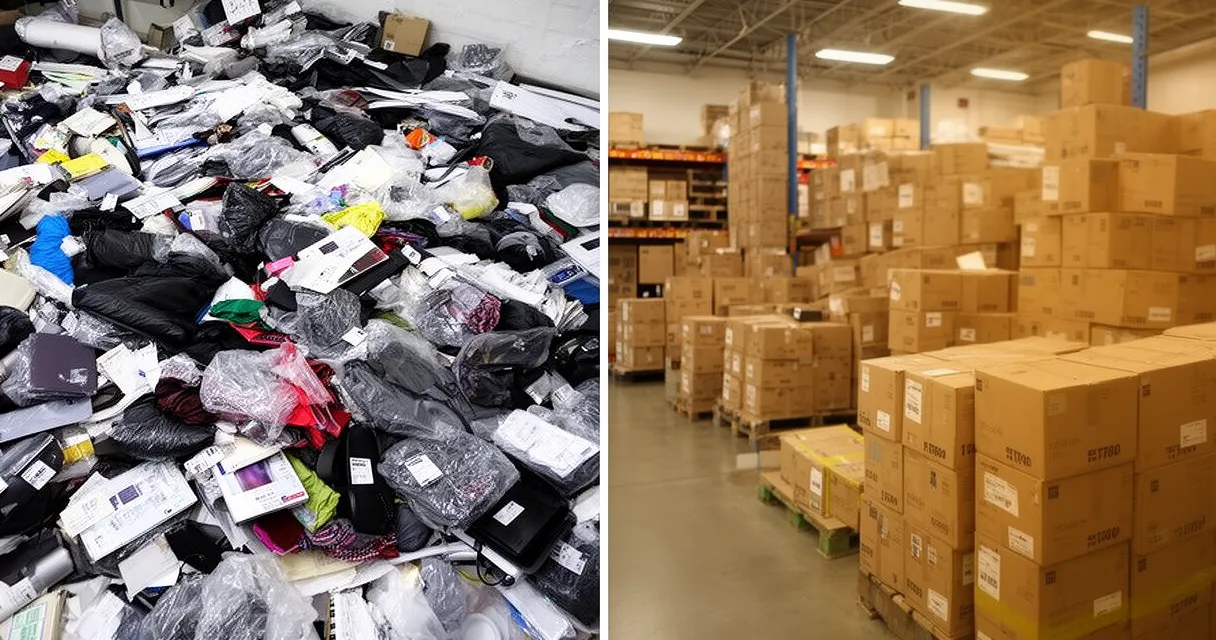
The secondhand market will hit $61 billion in 2026, but here’s the harsh truth: 80-90% of new resellers fail within their first year.
The reason? They buy the wrong inventory.
New resellers waste hundreds of dollars on items that sit unsold for months—creating what veterans call a “death pile”—because they don’t know where to source products or how to evaluate what’s actually worth buying before they invest.
This guide reveals exactly how to source inventory for reselling profitably, from completely free methods to wholesale suppliers, how to evaluate items before wasting money, and the biggest sourcing mistakes that drain beginner budgets. Quick answer: The best places to source inventory for reselling are thrift stores, estate sales, liquidation platforms like B-Stock, wholesale suppliers like Faire, and retail clearance sections. Always research Sell-Through Rate on sold listings before buying to ensure items actually sell quickly on your target platforms.
Understanding the Reselling Sourcing Landscape in 2026
The U.S. secondhand market is reaching $61 billion in 2026, with online apparel resale alone totaling $23.9 billion according to Capital One Shopping and NARTS data.
This isn’t a niche anymore. 60% of global consumers now shop resale, with Gen Z and Millennials leading the charge—though older generations are rapidly catching up (Business of Fashion / Retail Brew).
The opportunity is massive. But so is the failure rate.
Why Most Beginners Fail at Sourcing
E-commerce businesses have an 80-90% failure rate, and buying inventory without researching demand is the number one cause (Failory / CLOSO).
Here’s what happens: New resellers see items at thrift stores or liquidation sites that look valuable. They buy dozens of items based on gut feeling. Then those items sit in their spare bedroom for months, unsold.
The problem isn’t the sourcing locations—it’s buying without validating that people actually want to buy what you’re selling. Active listings don’t tell you what sells. Only completed sales do.
The Sourcing Strategy That Actually Works
Skip the death pile with this three-pillar approach to building a profitable reselling business:
- Start with low-cost or free sourcing to learn what sells without risking hundreds of dollars
- Research Sell-Through Rate before every purchase by checking sold listings, not active listings
- Scale to wholesale only after proving your categories—when you have consistent sales and understand your best niches
This strategy protects your capital while you learn. You’ll invest heavily only in categories you’ve already proven profitable.
Free and Low-Cost Methods to Source Inventory for Reselling (Best for Beginners)
Where to find products to resell when you’re just starting? Begin where the risk is lowest and the learning curve is gentlest.
Thrift stores offer 30-50% gross margins with items routinely flipping from $5 to $50-$100, especially vintage apparel (Side Hustle Nation / Capital One Shopping). Church thrift stores are often the most profitable because their pricing is typically lower than corporate chains.
Thrift Stores and Consignment Shops
Best places to source inventory for beginners include Goodwill, Salvation Army, local church thrift stores, and consignment shops.
Here’s how to maximize your thrift store sourcing:
- Shop right after donations come in (typically Monday-Wednesday mornings)
- Focus on brand-name items in clothing, shoes, accessories, and home goods categories
- Learn to spot quality markers: stitching, fabric weight, brand tags, original packaging
- Check labels religiously: A $5 shirt could be worth $60 if it’s the right brand
Church thrift stores are hidden gems. They often have volunteer staff who price items lower than corporate chains, and they receive high-quality donations from their congregation.
Estate Sales and Yard Sales
Thrift store sourcing tips work at estate sales too, but with even better negotiation opportunities.
Find estate sales using EstateSales.net, Facebook Events, or local classifieds. Here’s your game plan:
- Arrive early for best selection, or at the end for discounts (often 50-75% off on final day)
- Target estate sales in affluent neighborhoods for higher-quality items
- Look for vintage items, collectibles, and brand-name clothing that photographs well
- Negotiate at the end of the day—sellers want to clear inventory
Pro tip: Build relationships with estate sale companies. They’ll notify you of upcoming sales first.
Free Sourcing Options
Sourcing inventory for free is possible and smart when you’re learning. These methods require zero capital:
- Facebook Marketplace free section: People give away furniture, home goods, and clothing daily
- Buy Nothing groups on Facebook: Hyperlocal gifting communities
- Craigslist free section: Requires more vetting but can yield gems
- Nextdoor: Neighbors often post free items during moves or cleanouts
- Retail donation bins: Check the ground around charity bins—people leave items that don’t fit
- Your own closet: Sell items you no longer wear to fund initial inventory purchases
Free sourcing teaches you to list, photograph, and ship without financial risk. You’ll learn which categories sell fastest on your platforms before investing real money.
Retail Clearance Sections
Major retailers like Target, Walmart, and TJ Maxx have clearance sections with items marked down 50-90%.
Use these strategies:
- Shop seasonal clearance (after holidays, end of summer/winter)
- Scan barcodes with resale apps to check current selling prices
- Focus on items with original packaging (toys, electronics, beauty products)
- Look for restricted brands that aren’t widely available on resale platforms
The key is knowing what sells before you buy. Clearance items can be profitable, but only if there’s demand on your target platforms.
Wholesale and Liquidation Sourcing for How to Source Inventory for Reselling at Scale
Once you’ve proven your categories with local sourcing, wholesale suppliers for reselling let you access higher volumes and better margins.
But here’s the catch: wholesale requires more capital, storage space, and market knowledge. According to The Startup Story, professional resellers source 50-60% of their inventory from wholesale relationships and bulk deals.
Liquidation Platforms
B-Stock connects you directly to Amazon, Home Depot, and major retailer liquidations. BULQ offers curated boxes. Liquidation.com auctions pallets from major brands.
Here’s what you need to know:
- Lot grading matters: Grade A (like-new returns), Grade B (minor defects), Grade C (salvage/parts)
- Manifests aren’t always accurate: Expect 10-20% variance from listed contents
- Calculate ROI carefully: (Expected resale value × realistic sell-through %) - (pallet cost + shipping + fees + your time)
- Start with smaller lots ($100-300) before buying full pallets
Liquidation works when you can process volume quickly. If you’re still listing 2-3 items per week, you’re not ready for a 100-item pallet.
Wholesale Suppliers
Faire is a game-changer for small resellers. They offer Net 60 payment terms—you pay 60 days after receiving inventory, letting you sell items before your payment is due.
Other wholesale options:
- Alibaba: Direct from manufacturers (requires larger minimum orders)
- Regional wholesalers: Check for local distributors in your niche
- Trade shows: Build relationships, negotiate pricing, see products in person
Before committing to any wholesale supplier:
- Order samples first to verify quality
- Check reviews from other resellers
- Understand return policies (many wholesale sales are final)
- Calculate true margins including shipping and platform fees
When to Transition from Local to Wholesale
You’re ready to scale to wholesale when you can check all these boxes:
- ✅ Consistent sales in 2-3 specific categories for at least 3 months
- ✅ Proven Sell-Through Rate of 40%+ in those categories
- ✅ $500+ monthly profit from reselling (proving your business model works)
- ✅ Storage space for bulk inventory
- ✅ Capital available ($500-1,000 minimum) without impacting your living expenses
Wholesale is a scaling tool, not a starting point. Master local sourcing first.
How to Evaluate Items Before You Buy (The Sell-Through Rate Method)
The Sell-Through Rate is the percentage of listed items that actually sell. It’s the difference between profitable sourcing and a closet full of dead inventory.
Here’s the brutal truth: Just because 50 people are listing an item doesn’t mean anyone is buying it.
Research Sold Listings, Not Active Listings
This is where beginners lose money. They see hundreds of active listings for an item and assume it’s valuable. But those could be sitting unsold for months.
Here’s how to research actual demand:
On eBay:
- Search for the item
- Filter by “Sold” listings (not completed—that includes unsold)
- Check: How many sold in the last 30 days? At what prices? How quickly?
On Poshmark:
- Search the item
- Filter to “Sold” items
- Look for: Recent sales, selling price range, condition of sold items
On Mercari:
- Search and check “Sold” status
- Note: Selling price and time listed before sale
If you can’t find at least 5-10 sold listings in the past 30 days, the market is too small. Skip it.
Calculate Your Break-Even Point
Use this formula before buying anything:
Item cost + platform fees + shipping + (your time × hourly rate) = minimum selling price
Platform fees typically run:
- eBay: 12.9% + $0.30
- Poshmark: 20% (sales over $15)
- Mercari: 10-12.9%
- Facebook Marketplace: 5% (shipped items)
For thrift store items, aim for 3-5x your cost. If you pay $5, you should sell for $15-25+ to make it worth your time.
For wholesale, margins are tighter—typically 30-50% profit margin after all fees.
Category-Specific Red Flags
Avoid these common money traps:
- ❌ Fast fashion brands (Shein, Fashion Nova, Old Navy basics): Oversaturated market, low resale value
- ❌ Heavily worn shoes: Hard to sell unless designer brands in good condition
- ❌ Electronics without original packaging: Return risk is too high
- ❌ Items banned on platforms: Counterfeit goods, recalled items, used cosmetics
- ❌ Books and media (unless rare/collectible): Shipping costs eat profit margins
Stick to categories with proven demand until you’ve built capital and experience.
Using AI Tools to Research Inventory Value
AI-powered pricing tools are transforming how resellers evaluate inventory in 2026. Instead of manually checking dozens of sold listings, smart resellers now use:
- ChatGPT and Claude to analyze market trends by feeding them sold listing data and asking for pricing recommendations
- eBay’s AI-powered Terapeak (built into seller accounts) to get instant sell-through rates and suggested pricing
- Computer vision APIs that can identify brands and items from photos, helping you spot valuable pieces you might miss
For example, you can photograph a vintage item, upload it to a computer vision model, and instantly identify the brand, era, and comparable sold listings—all while still at the thrift store.
This speeds up sourcing decisions from 5-10 minutes per item to under 30 seconds.
Best Sourcing Strategies by Platform
Different platforms favor different inventory types. Where to find products to resell depends on where you’re selling them.
Sourcing for eBay Resellers
eBay buyers want:
- Collectibles (trading cards, vintage toys, memorabilia)
- Vintage items (clothing, home goods from specific eras)
- Electronics (with original packaging and accessories)
- Niche items with specific model numbers
Use eBay’s Terapeak (free with seller account) to research:
- Search volume for items
- Average selling price
- Sell-through rate
- Seasonal trends
Source at: Estate sales, specialized thrift stores, liquidation for electronics, storage unit auctions.
Sourcing for Poshmark and Mercari
These platforms excel at:
- Brand-name clothing (mid-tier to luxury brands)
- Shoes and accessories in excellent condition
- Trending styles (check platform search trends monthly)
- Women’s items (70%+ of sales)
Focus your thrift store time on:
- Clothing racks with brand tags visible
- Shoe sections (look for minimal wear, original boxes)
- Designer accessories (even if not your style, research value)
Check sold listings for specific brands before buying. Some brands sell in 24-48 hours; others sit for months.
Multi-Platform Strategy
Cross-listing your inventory across multiple platforms can increase sell-through rate by 40-60% compared to single-platform selling (Vendoo / CLOSO).
Here’s why it works:
- Different buyer pools: eBay collectors differ from Poshmark fashion buyers
- Price flexibility: Test different price points on different platforms
- Faster sales: More eyes on your inventory means quicker turnover
- Algorithm advantages: New listings get visibility boosts on each platform
The challenge? Manually recreating listings on 3-4 platforms is time-consuming and error-prone.
Cross-listing tools solve this by letting you create a listing once and publish it everywhere. They sync inventory automatically, so when an item sells on Poshmark, it’s immediately delisted from eBay and Mercari—preventing the nightmare of selling the same item twice.
Smart resellers also use these inventory management tools to track which sourcing channels generate the highest ROI on each platform. You might discover that thrift store vintage clothing sells best on Poshmark, while estate sale electronics move fastest on eBay—allowing you to source more strategically over time.
The 7 Biggest Sourcing Mistakes Beginners Make (And How to Avoid Them)
Learn from others’ expensive mistakes instead of making your own.
Mistake #1: Buying Without Researching Demand
The “death pile” phenomenon is real. Resellers buy items that look valuable without checking if anyone actually wants to buy them.
How to avoid it:
- Never buy inventory without checking sold listings first
- Validate demand with at least 5-10 sales in the past 30 days
- If you can’t find sold comps, don’t buy it
This one habit will save you hundreds of dollars in your first three months.
Mistake #2: Overspending on Initial Inventory
Beginners often think they need to spend $500-1,000 to get started. Then they realize they bought items that don’t sell, and their capital is trapped.
Start with $50-100 maximum.
Allocate it this way:
- 70% on proven categories (items you’ve researched with high sell-through)
- 30% on experimenting with new categories
Reinvest your first profits before adding new capital. This proves your business model works before scaling.
Mistake #3: Not Tracking Sourcing ROI
You can’t improve what you don’t measure. If you don’t track which sourcing locations generate the best returns, you’ll waste time at low-profit sources.
Create a simple spreadsheet with:
- Sourcing location
- Item cost
- Selling price
- Platform fees
- Time to sell
- Net profit
- ROI percentage
After 20-30 sales, you’ll see clear patterns. Maybe estate sales give you 200% ROI while thrift stores only hit 100%. Double down on what works.
Mistake #4: Buying Pallets Too Early
Liquidation pallets sound appealing: hundreds of items for cents on the dollar. But they’re a disaster for beginners.
Here’s why:
- Unsorted inventory: You’ll spend 20+ hours sorting, testing, and evaluating items
- Storage issues: Where will you put 100 items?
- Listing bottleneck: Can you actually list 100 items in a reasonable timeframe?
- Unknown sell-through: You haven’t validated that these item categories sell for you
You’re ready for wholesale when:
- You can comfortably list 10+ items per week
- You have proven sell-through in the pallet’s categories
- You have storage space and capital that won’t hurt if the pallet underperforms
Mistake #5: Relying on Only One Sourcing Channel
If you only source at thrift stores, you’ll hit inventory scarcity. If you only buy liquidation, you’ll struggle with competition.
Diversify your sourcing:
- 70% on your best channel (highest ROI)
- 30% testing new channels
This protects you when one source dries up or becomes too competitive.
Mistake #6: Ignoring Platform-Specific Rules
Each platform bans certain items. Sell them anyway, and you risk account suspension.
Common restricted items:
- Used cosmetics or skincare
- Recalled products
- Counterfeit goods (even if you didn’t know)
- Weapons and weapon accessories
- Adult items
Check your platform’s prohibited items list before sourcing. When in doubt, skip it.
Mistake #7: Not Using AI to Speed Up Research
In 2026, manually researching every item is inefficient. Resellers who use AI-powered tools to analyze market data make faster, better sourcing decisions.
Train AI models on your best-selling categories. Feed them sold listing data, and they’ll flag high-probability items while you’re still at the thrift store.
Managing Your Sourced Inventory Efficiently
Sourcing is only half the battle. Getting items listed quickly maximizes your ROI.
From Sourcing to Listing: The Workflow
Here’s the system that prevents “death pile” procrastination:
- Clean items immediately when you get home (same day)
- Photograph within 24 hours using natural light near a window (learn more about photographing your sourced inventory)
- Research pricing and write descriptions the same day
- List within 48 hours maximum
Why the urgency? The longer items sit unlisted, the less likely you’ll list them at all. They become “I’ll do it later” clutter.
Batch your workflow: Photograph 10 items at once, then write 10 descriptions, then list all 10. It’s faster than doing one item start-to-finish.
Cross-Listing to Maximize ROI
Listing on 3+ platforms increases sell-through by 40-60% (Vendoo / CLOSO). That’s the difference between a 30-day sale and a 7-day sale.
But manually recreating listings is painful. You’d need to:
- Upload photos to each platform separately
- Rewrite descriptions to match each platform’s format
- Set pricing individually
- Manually delist when items sell to avoid double-sales
Cross-listing tools automate this entire process. You create the listing once, select which platforms to publish to, and the tool handles the rest—including inventory sync when items sell.
The best resellers also use inventory management software with AI-powered price suggestions that analyze your historical sales data and current market trends to recommend optimal pricing for each platform. Some tools even use machine learning to predict which items will sell fastest on which platforms, helping you prioritize listings.
Smart resellers use these inventory management tools to track which sourcing channels generate the highest ROI on each platform, helping you source more strategically over time.
Tracking What Sourcing Channels Work Best
After 30 days of sales, analyze your data:
- Which sourcing location has the highest profit margin?
- Which has the fastest turnover (time from purchase to sale)?
- Which requires the least time investment?
- Which has the most consistent inventory?
The answers will surprise you. What feels like your best source might not be your most profitable when you run the numbers.
Adjust your sourcing schedule based on data, not feelings.
How Much Money Do You Need to Start Sourcing?
The beauty of reselling? You can start with literally $0.
The $0 Startup Method
Sourcing inventory for free teaches you the business fundamentals without financial risk:
- Sell items from your own closet first (you probably have $200-500 worth of items you don’t use)
- Source from Facebook Marketplace free section and Buy Nothing groups
- Use consignment agreements (you list items for friends/family, split the profit)
Use these profits to fund your first paid inventory purchases. You’re bootstrapping with zero capital risk.
The $50-200 Beginner Budget
Most successful resellers start here. It’s enough to buy 10-20 items at thrift stores and prove your model.
Allocate it this way:
- $35-140 (70%) on proven categories: Items you’ve researched with high sell-through rates
- $15-60 (30%) on experimenting: Testing new categories or higher-priced items
Reinvest your first profits before adding more capital. If you make $100 profit in month one, use that $100 to buy more inventory. This compounds faster than adding fresh capital each month.
Scaling to $500+ Inventory Budgets
You’re ready to increase your sourcing budget when:
- You’re consistently selling 80%+ of your inventory within 60 days
- You have a proven system for listing items within 48 hours of sourcing
- You understand your best categories and sourcing locations
- You have storage space for larger inventory
At this level, you can use strategies like Faire’s Net 60 terms—buying inventory now but paying in 60 days, essentially getting free financing if you sell items before payment is due.
Cash flow management becomes critical:
- Track your inventory investment vs. available cash
- Don’t tie up all your capital in unsold inventory
- Keep 20-30% liquid for unexpected opportunities
Remember: It’s better to have $200 turning over every 2 weeks (generating $600/month profit) than $1,000 sitting unsold for 3 months.
Frequently Asked Questions
What are the best places to source inventory for reselling on a budget?
Thrift stores, estate sales, yard sales, and the Facebook Marketplace free section are the best places to source inventory on a budget. Start with free or low-cost methods where items cost $5-20 before investing in wholesale. Church thrift stores often have the best pricing with items priced 30-50% below corporate chains like Goodwill. Target and Walmart clearance sections also offer items marked down 50-90% that can be profitable if you verify demand first.
How do I know if an item is worth reselling before I buy it?
Research sold listings (not active listings) on your target platform. On eBay, use the “Sold” filter. On Poshmark and Mercari, filter to sold items. Calculate your profit: (expected selling price - platform fees - shipping - item cost) = net profit. Aim for 3-5x your cost for thrift items. If items aren’t selling consistently (you can’t find at least 5-10 sold listings in the past 30 days), skip it. Low Sell-Through Rate means death pile inventory.
What are the biggest mistakes beginners make when sourcing inventory?
The biggest mistakes are: (1) Buying items without researching if they actually sell, creating “death piles” of unsold inventory, (2) Spending too much upfront ($500+ instead of $50-100 to learn first), (3) Buying liquidation pallets before learning how to sell individual products, (4) Not tracking which sourcing locations are most profitable, wasting time at low-ROI sources, and (5) Relying on only one platform instead of cross-listing to increase sell-through by 40-60%.
Should I source locally or buy wholesale online?
Start with local sourcing (thrift stores, estate sales, yard sales) to learn what sells with minimal financial risk. Transition to wholesale and liquidation only after you have: consistent sales in specific categories for 3+ months, proven Sell-Through Rate of 40%+, $500+ monthly profit, storage space, and deep understanding of your best niches. Wholesale requires more capital ($500-1,000 minimum) and storage space, so it’s a scaling tool, not a starting point.
How much money do I need to start sourcing inventory for reselling?
You can start with $0 using free sourcing methods like Facebook Marketplace free items, Buy Nothing groups, or selling items from your own closet. A realistic beginner budget is $50-200. Allocate 70% to proven categories you’ve researched and 30% to experimenting. Reinvest your first profits before adding new capital. Don’t buy wholesale or liquidation pallets until you’ve proven you can sell individual items profitably. Many successful resellers started with under $100.
Conclusion
Learning how to source inventory for reselling profitably comes down to five core principles:
Start with low-cost sourcing methods like thrift stores, estate sales, and free sources to learn what sells without risking hundreds of dollars. Your first goal is education, not inventory volume.
Always research Sell-Through Rate on sold listings before buying anything. This single habit prevents the “death pile” of unsold inventory that kills most beginner reselling businesses.
Track ROI by sourcing channel so you can double down on what actually works. After 30 sales, you’ll have clear data showing which sources generate the best margins and fastest turnover.
Cross-list to multiple platforms to increase sell-through by 40-60% and get items in front of more buyers. The same item that sits on eBay for 60 days might sell on Poshmark in 3 days.
Scale to wholesale only after proving your categories, cash flow, and listing systems. Wholesale is a tool for experienced resellers who know exactly what sells—not a shortcut for beginners.
Ready to turn your sourced inventory into consistent income? Start with one free sourcing method this week—the Facebook Marketplace free section or your own closet. Research sold prices before buying anything. List your first items on at least two platforms using pricing strategies for Poshmark and similar platforms to maximize your chances of a quick sale. Your reselling business starts with one sourced item listed today, not tomorrow.